One of the most important elements of any Montessori classroom is the prepared environment. At Chestnut Montessori School, we put deep effort and intention into organizing our indoor and outdoor spaces so that they naturally invite children to learn, explore, and build personal independence.
In our classrooms, you will not see a teacher’s desk as a focal point—in fact, you won't find a teacher's desk at all! Every square foot of the environment is a tool created specifically for the children, serving their natural developmental needs.
Designed with Child Development in Mind
Montessori educators make every environmental choice based on developmental neuroscience and Dr. Maria Montessori's Planes of Development. A child's needs are fundamentally different from an adult's, and they evolve rapidly as they grow.
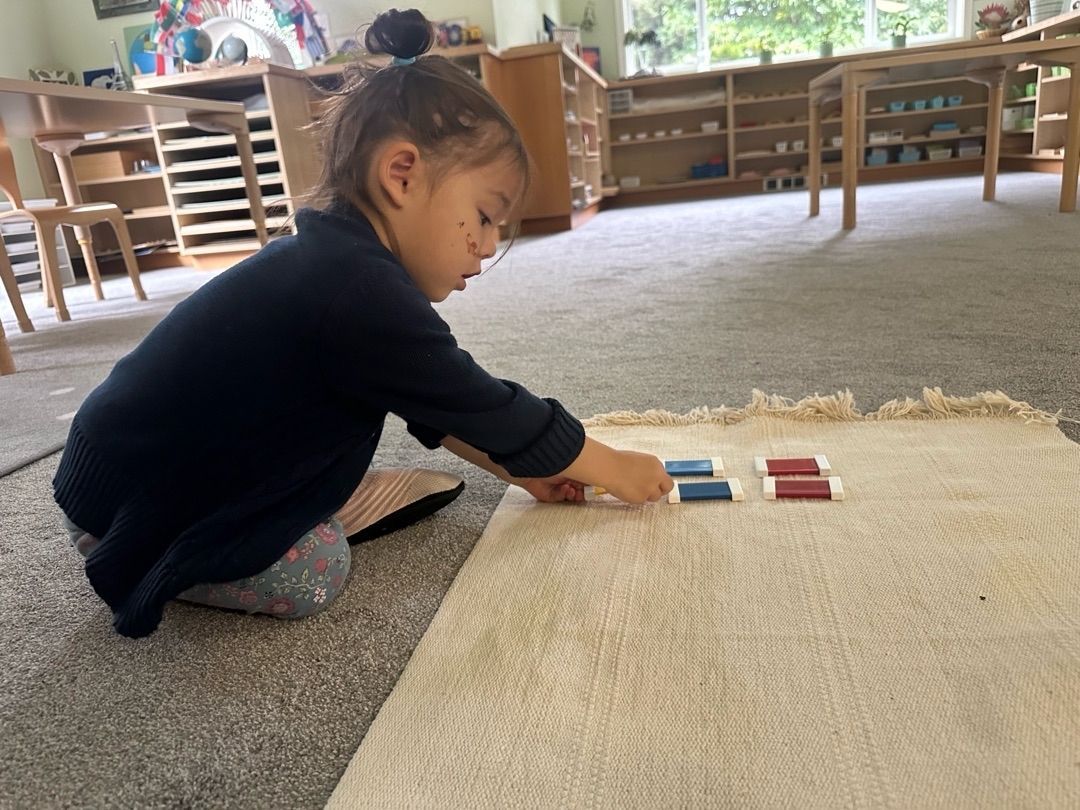
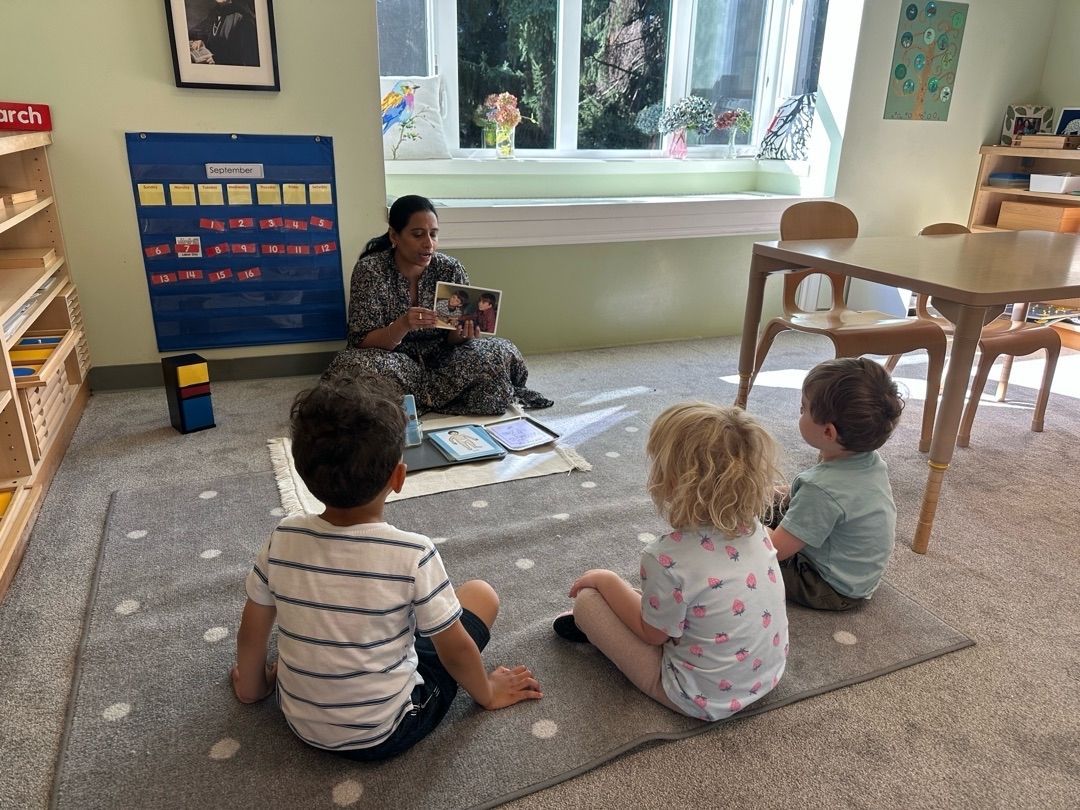
- Child-Scaled Furniture: Our tables, chairs, and low wooden shelves are sized perfectly for little hands and bodies.
- Natural Materials: Whenever possible, we choose real wood, glass, and natural textiles, creating a calm, home-like atmosphere.
- Tailored Materials: On our low shelves, the learning materials cater specifically to the developmental window of the classroom—whether for our Toddlers (18–36 months) or Early Childhood students (3–6 years).
Honoring the Natural Need for Movement
Children are not meant to sit still in a chair for hours at a time. Growing bodies and developing brains work best when movement is integrated into learning.
In our small, cozy classrooms, you will find floor rugs where children can spread out their work, group tables for collaborative activities, and light individual seating. Children do not have assigned desks; instead, they choose where and how they work best. Moving between shelf presentations teaches them to listen to their physical cues—recognizing when they need to stretch, rest, work alongside a friend, or focus quietly on their own.
The Core Areas of Our Primary Classrooms
Our materials are thoughtfully arranged into five foundational curriculum areas:
- Practical Life: Real-world activities like pouring water, spooning, preparing snacks, caring for plants, and buttoning frames. These build concentration, fine motor control, and self-reliance.
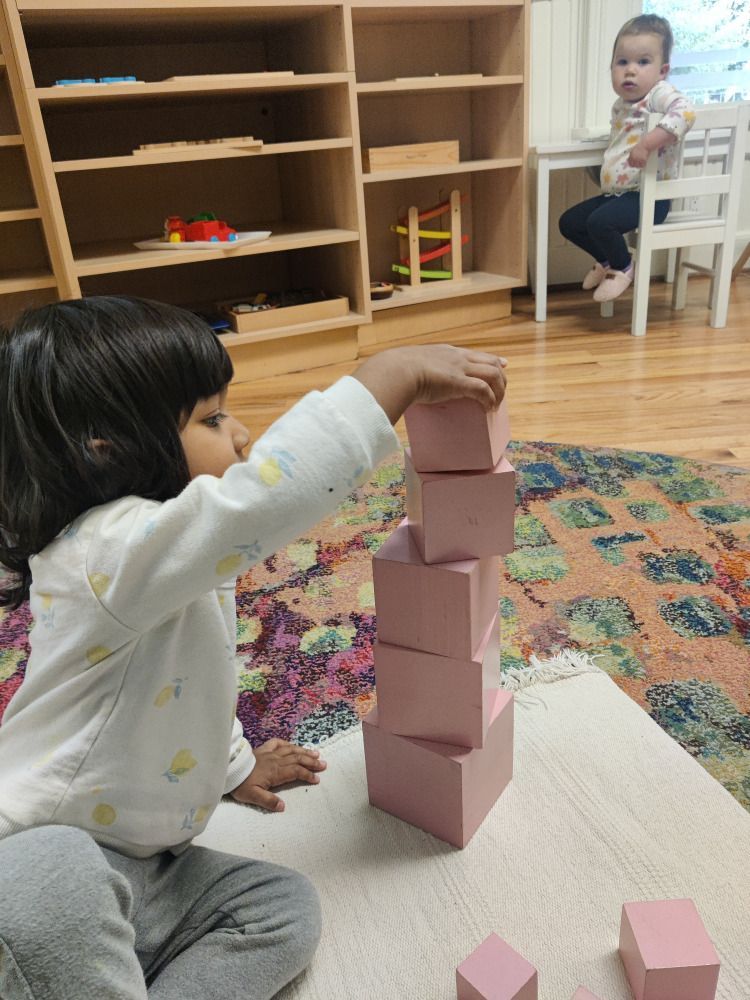
- Sensorial: Materials designed to help children classify and refine their senses—discerning subtle differences in size, shape, weight, color, and texture (like our Cylinder Blocks and Pink Tower).
- Mathematics: Hands-on, tactile materials (such as bead chains and spindle boxes) that transform abstract mathematical concepts into concrete physical experiences.
- Language: Rich, phonetic work—from sandpaper letters and metal insets to storytelling—that builds early reading and writing readiness effortlessly.
- Cultural Studies: An exciting introduction to Botany, Zoology, Geography, and Physical Science, giving children a global perspective on the world around them.
Bringing Nature Indoors (and Stepping Outside!)
We believe nature is one of our greatest teachers. Inside our classrooms, you’ll find live indoor plants, natural specimens, fossils, and smooth river stones that spark natural wonder.
Outside, our Bellevue campus offers something truly special: a rich natural outdoor space complete with real grass, garden beds, and fruit trees. Whether tending to tomato plants or observing seasonal changes outdoors, our students develop a deep reverence for the earth.
Simplicity, Order, and Autodidactic Learning
You won't find bright, overstimulating primary colors or busy wall posters at Chestnut. Our calm, neutral aesthetic keeps the child's focus entirely on the beauty of the learning materials themselves.
Materials are ordered on the shelves with great care—placed sequentially from left to right, simplest to most complex. Because most Montessori materials are autodidactic (self-correcting), children can instantly see if a piece doesn't fit or a calculation is off. This allows them to solve problems independently without relying on an adult to point out errors, building genuine self-efficacy.
The Environment as a Co-Teacher
In a classical Montessori setting, the prepared environment functions as a silent teacher. When the space is organized to meet the child's true physical and cognitive needs, learning unfolds naturally, joyfully, and independently.
Interested in seeing our prepared environment in person?
We invite you to
schedule a private tour of Chestnut Montessori School to observe our calm classrooms and beautiful outdoor grounds in action.